

Ima meaning is one of the most searched texting terms today, and if you have seen it pop up in a DM, a TikTok comment, or a group chat and paused to figure out what it means, you are far from alone. “Ima” is a short, casual way of saying “I am going to” or “I’m gonna,” and it shows up constantly in modern digital conversation. This guide breaks down everything you need to know about the word, from its roots in spoken English to how it plays out across different apps, relationships, and cultures, so you never have to guess again.
Ima Meaning – Quick Definition
At its core, “ima” is a contraction that stands for “I am going to.” It is spoken language written down exactly the way it sounds when people talk fast.
People use it to describe something they plan to do very soon, whether that is leaving a place, trying something new, or making a decision. It is not slang with a hidden or secret meaning. It is simply a shortcut for a common English phrase, shaped by how casual speech naturally gets compressed in texting and online chatting.
Simple Examples
- “Ima head to the store, need anything?”
- “Ima call you after work.”
- “Ima be honest, I didn’t like the movie.”
- “Ima try this new recipe tonight.”
In every example above, “ima” replaces “I am going to” without changing the meaning of the sentence at all.
Quick Summary
“Ima” means “I am going to” or “I’m about to.” It is informal, used mainly in texting, social media, and spoken conversation, and it signals a near-future action or intention. It is not appropriate for formal writing, resumes, or professional emails, but it is completely normal among friends, on social platforms, and in casual daily texting.
Read More : What Does Sybau Meaning in Text? (2026 Slang Guide with Examples & Replies)
Origin and Background of “Ima”
The word “ima” did not appear overnight. It grew out of natural speech patterns, specifically the way English speakers tend to blend words together when talking quickly. “I am going to” gradually gets compressed in spoken rhythm: first to “I’m gonna,” then further to “I’ma,” and finally to the simplified spelling “ima” that dominates texting today.
This pattern of contraction is common in African American Vernacular English (AAVE), which has heavily influenced mainstream American slang, music lyrics, and internet culture for decades. Many widely used expressions in texting and pop culture, including “ima,” trace their roots back to AAVE speech patterns that later spread through hip hop, R&B, television, and social media.
Once texting and instant messaging became the primary way people communicated day to day, spelling started following sound rather than traditional grammar rules. People were not trying to write correct English; they were trying to type what they would naturally say out loud, and “ima” fit that need perfectly. It is fast to type, requires no apostrophe, and gets the point across in three letters.
By the 2010s, “ima” had fully crossed over into mainstream digital communication, no longer limited to any one group. Today it shows up in texts from teenagers, working adults, celebrities on Twitter, and brands trying to sound relatable online.
Real-Life Conversations Using “Ima”
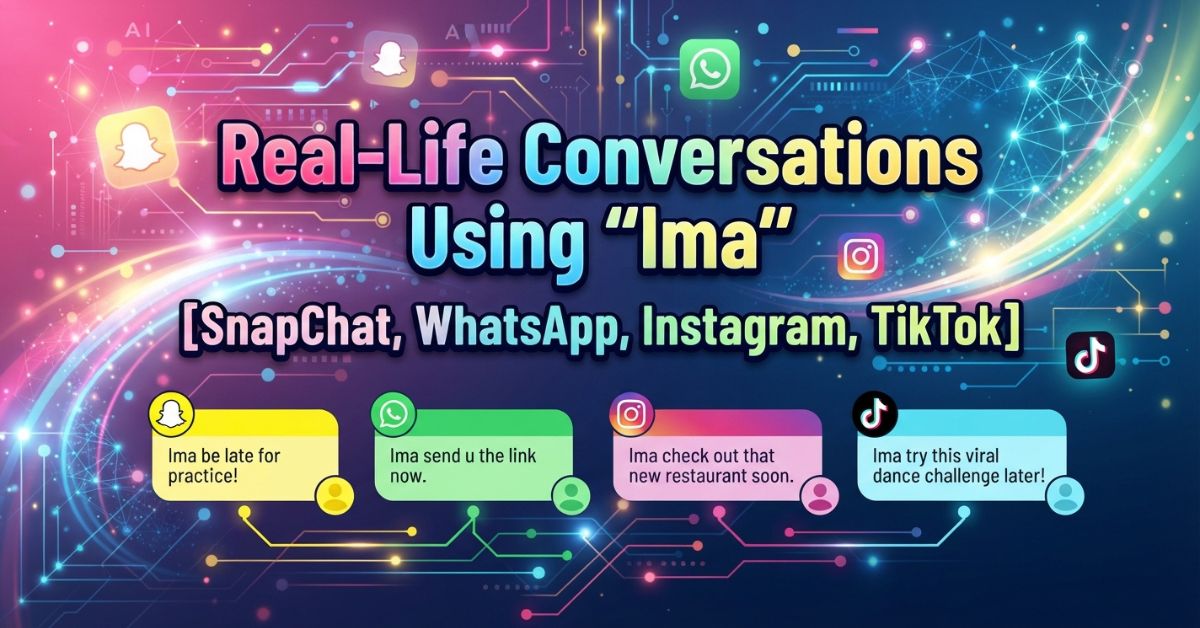
Seeing “ima” in context makes its meaning much clearer than any dictionary definition. Here is how it naturally appears across different messaging platforms.
WhatsApp Conversation
Sara: Are you still coming to dinner? Priya: Yes! Ima leave my place in 10 minutes. Sara: Perfect, see you soon.
Instagram DM
Jake: That editing tutorial you posted was fire. Alex: Thanks man, ima drop a part two next week.
TikTok Comments
User1: This recipe looks amazing. User2: Ima try this fr, looks so easy.
Text Message
Mom: Did you finish your homework? Teen: Not yet, ima do it right after dinner.
Across every single example, the underlying meaning stays consistent. Someone is announcing an intention or a near-future action in a relaxed, conversational tone.
Emotional and Psychological Meaning Behind “Ima”
Words like “ima” carry more than just grammatical shorthand. The way people choose to write reveals something about tone, relationship, and intent, and “ima” does specific emotional work in a conversation.
It Creates Informality
Choosing “ima” instead of “I am going to” instantly signals a relaxed, unguarded tone. It tells the other person that the conversation is casual and comfortable, not formal or distant. This is one reason “ima” almost never appears in messages to a boss, a professor, or someone a person does not know well.
It Signals Immediate Intention
“Ima” usually points to something happening soon rather than a distant, uncertain plan. Saying “ima call you” feels more immediate and committed than “I might call you sometime,” which makes the word useful for quick confirmations and plans.
It Builds Social Connection
Slang works as a kind of social shorthand. Using words like “ima” with someone signals shared familiarity and comfort, almost like an unspoken agreement that both people are on the same casual wavelength. It can make digital conversations feel warmer and more personal than stiff, fully formal sentences.
Read More : ND Meaning in Text: What It Really Means in Chats, Social Media & Everyday Conversations
How “Ima” Is Used in Different Contexts
The meaning of “ima” barely changes across situations, but the appropriateness of using it shifts quite a bit depending on where and with whom someone is communicating.
Social Media
On platforms like Instagram, TikTok, and Twitter/X, “ima” appears constantly in captions, comments, and replies. It fits the fast, informal, personality-driven tone that social media rewards.
Friends and Relationships
Among friends, partners, and family members, “ima” is extremely common. It fits naturally into everyday plans, jokes, and quick updates, and it rarely comes across as rude or careless in these settings.
Work and Professional Settings
In work emails, official Slack channels, or messages to clients, “ima” is generally best avoided. It can come across as unprofessional, even if the relationship with a coworker is friendly, because formal settings usually call for standard grammar.
Casual vs. Serious Situations
Even among friends, tone matters. Using “ima” while joking around fits perfectly, but in a serious conversation involving a real problem, a full sentence like “I am going to” can feel more sincere and thoughtful.
Common Misunderstandings About “Ima”
Because “ima” is so widely used, several myths and misunderstandings have built up around it. Clearing these up helps people use and interpret the word more accurately.
Misunderstanding #1: It’s a Typing Error
Many people assume “ima” is just a typo for “I am” or a rushed mistake. In reality, it is an intentional, recognized informal contraction with a specific and consistent meaning.
Misunderstanding #2: Everyone Uses It the Same Way
While the core meaning stays the same, tone and intensity can shift depending on who is using it, their age, their region, and the context of the conversation, so it is not always perfectly uniform.
Misunderstanding #3: It’s Appropriate Everywhere
Some assume that because “ima” meaning is everywhere online, it is safe to use in any setting. That is not accurate. Professional and formal contexts still call for standard English.
Misunderstanding #4: It Always Means the Exact Same Thing
Occasionally “ima” meaninggets used loosely to mean “I’m about to” in a broader sense, including for things that are not truly imminent. Context always matters more than the word itself.
Comparison Table
| Term | Meaning | Common Usage | Formality Level |
|---|---|---|---|
| Ima | I am going to | Texting, social media | Very informal |
| Imma | I am going to | Texting, spoken slang | Very informal |
| I’ma | I am going to | Spoken English, lyrics | Very informal |
| I’m gonna | I am going to | Casual speech and writing | Informal |
| I am going to | Standard phrase | Formal and everyday writing | Formal/neutral |
Key Insight
Every version in the table above carries the exact same core ima meaning. The only real difference lies in spelling style and the level of formality each one fits, not in what the phrase is actually communicating.
Variations and Types of “Ima”
“Ima”meaningshows up in several common spellings and combined phrases. Recognizing these variations makes it much easier to read and respond naturally in any conversation.
1. Ima
The most common and widely typed version, used across nearly every messaging platform.
2. Imma
A slightly extended spelling with a double “m,” often used for emphasis or to mimic a more drawn-out spoken sound.
3. I’ma
A version that keeps the apostrophe, closer to the original spoken contraction of “I’m going to.”
4. Ima Go
Used to announce leaving a place or ending a conversation soon.
5. Ima Try
Expresses willingness to attempt something, often with a hint of uncertainty about the outcome.
6. Ima See
Commonly used to say someone will check on something or figure it out later.
7. Ima Be Honest
A very popular lead-in phrase before sharing an honest, sometimes blunt, opinion.
8. Ima Head Out
A casual way of announcing departure, often used at the end of a hangout or call.
9. Ima Call You
Used to confirm a phone call will happen soon.
10. Ima Think About It
Signals that a decision has not been made yet but is being considered.
How to Respond When Someone Uses “Ima”
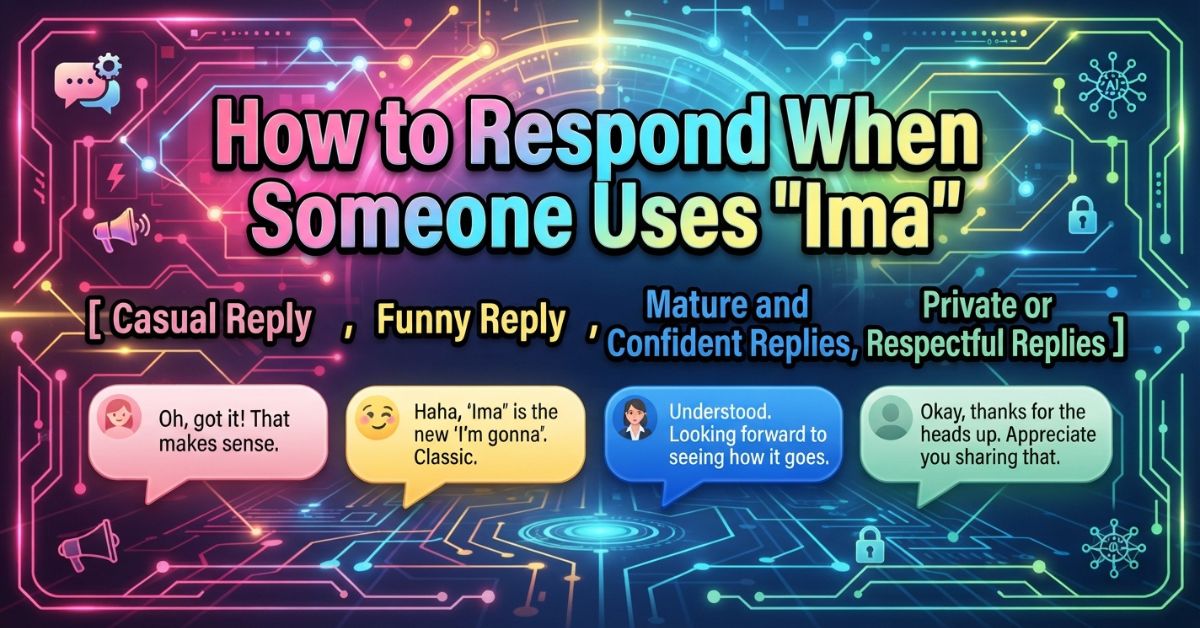
Matching tone matters in digital conversation like ima meaning and imma. Here are natural ways to respond depending on the vibe of the exchange.
Casual Replies
- “Okay, sounds good.”
- “Bet, let me know.”
- “Cool, text me when you’re there.”
Funny Replies
- “Ima wait right here then lol.”
- “Say less.”
- “Ima hold you to that.”
Mature and Confident Replies
- “Sounds like a plan, talk soon.”
- “Appreciate you letting me know.”
- “Looking forward to it.”
Private or Respectful Replies
- “Take your time, no rush.”
- “Let me know if anything changes.”
- “I’ll be here whenever you’re ready.”
Regional and Cultural Usage of “Ima”
While “ima” meaning is now used globally online, its adoption and comfort level still vary somewhat by region and culture.
Western Culture
In the United States and other English-speaking Western countries, “ima” is deeply embedded in everyday texting, music, and pop culture, especially influenced by American hip hop and R&B language patterns.
Asian Culture
Across much of Asia, English-speaking younger audiences on social media have picked up “ima” primarily through exposure to American music, movies, and platforms like TikTok, using it mostly online rather than in daily spoken conversation.
Middle Eastern Culture
In Middle Eastern countries, English-fluent younger users frequently mix “ima” into English-language texting and social media captions, often blending it with local languages in the same sentence.
Global Internet Usage
Because platforms like TikTok, Instagram, and Twitter/X connect audiences worldwide, “ima” has become a genuinely global piece of internet slang, understood far beyond its original cultural roots, even by people who do not use it themselves.
Frequently Asked Questions (FAQs)
What does “ima” meaning in texting?
“Ima” means “I am going to.” It is used to describe something a person plans to do soon.
Is “ima” proper English?
No, “ima” is informal slang and is not considered standard or grammatically correct English.
What’s the difference between “ima” and “imma”?
There is no real difference in ima meaning and imma. Both mean “I am going to”; “imma” is simply a slightly different spelling style.
Is “ima” used on TikTok?
Yes, “ima”meaning is extremely common in TikTok captions, comments, and video dialogue.
Can adults use “ima”?
Yes, adults use “ima” meaning often in casual texting and social media, though it is generally avoided in professional settings.
Should I use “ima” at work?
No, it is best to use standard phrases like “I am going to” in professional emails and workplace communication.
Is “ima” rude?
No, “ima” is not rude. It is simply informal and works best in casual, friendly conversations.
Read More : GNG Meaning: What It Really Means in Text, Slang, and Social Media
Conclusion
“Ima”meaning is a simple, informal way of saying “I am going to,” born out of natural spoken English and shaped by decades of cultural influence, texting habits, and social media speed. It shows up everywhere from WhatsApp chats to TikTok comments, carrying a consistent meaning while adapting its tone to fit friends, relationships, and casual online spaces. While it is not suited for formal writing or professional settings, understanding “ima” makes everyday digital conversations easier to follow and lets you respond naturally, whether that means matching the casual energy or replying with a touch more polish.

Axel Miles is a writer and language researcher at Magazine Zeto, focused on explaining text meanings, slang, acronyms, and online expressions. Axel creates clear, practical guides that help readers understand modern digital language, with a focus on accuracy, context, and easy-to-follow explanations for everyday communication.